Company News
·
August 27, 2026
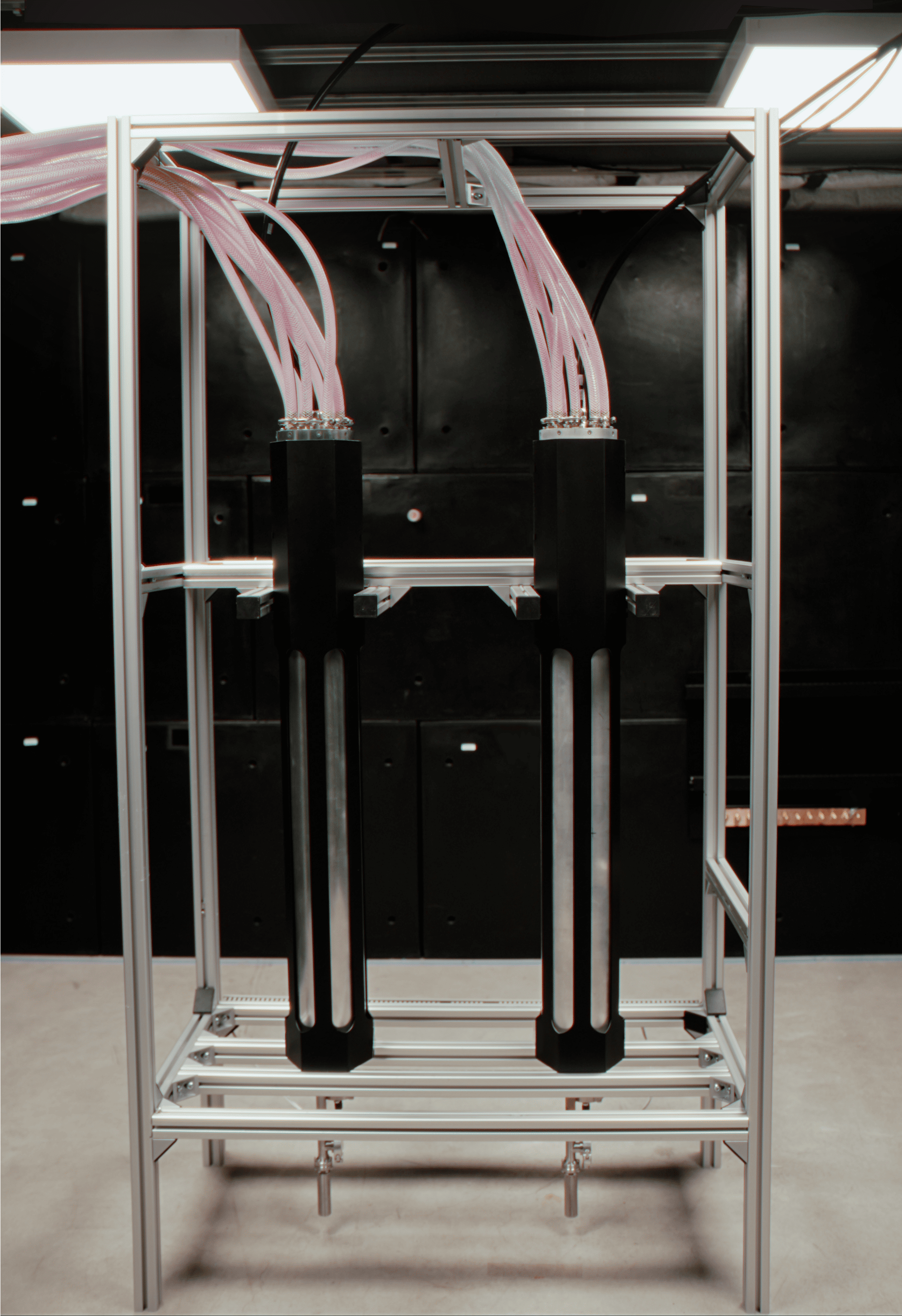
The future of fusion will not be determined only by who builds the first commercial power plant. It will also be determined by who gives innovators access to the fusion environments needed to build the technologies around it.
For decades, deuterium-tritium (DT )fusion environments have been available predominantly through a small number of government laboratories. Companies developing fusion technologies, advanced materials and medical applications have depended on limited national infrastructure.
That has created a bottleneck. Innovation has slowed. Costs have increased. Development timelines have stretched.
Astral Systems is changing that.
The company is building one of the world's first commercially accessible DT fusion platforms. It is creating the infrastructure needed to support the wider fusion economy.
Researchers, industrial partners and governments can now access a privately developed DT fusion platform, bringing capabilities that were previously available predominantly through major national facilities into the commercial market.
Today, Astral announced that the UK Atomic Energy Authority (UKAEA) has commissioned experimental work at the company's privately developed DT fusion facility. The announcement follows Astral's successful demonstration of sustained DT operations.
The milestone represents a step towards greater UK technological sovereignty. As governments seek greater control over strategically important technologies, commercial fusion infrastructure can reduce reliance on overseas facilities and strengthen domestic capability.
The opportunity extends beyond fusion energy.
Fusion neutron environments support the development of advanced materials, radiation detectors and future medical isotope production. Expanding access to these capabilities could strengthen UK supply chains for critical healthcare technologies and accelerate innovations in diagnostics and cancer treatment.
As part of the commissioned programme, UKAEA researchers carried out experimental measurements using specially irradiated materials and radiation diagnostics. The work supports UKAEA's development of neutron characterisation capabilities for future fusion research facilities.
Astral has demonstrated a commercially significant operational milestone: continuous deuterium-tritium(DT) fusion for more than 60 hours in two reactor modules operating simultaneously. The company is now extending this capability to support weeks and eventually months of continuous operation, giving customers access to increasingly representative fusion testing environments.
Mark Gilbert, Head of Programme, Fusion Materials Interfaces at UK Atomic Energy Authority, commented:
"Our decision to commission Astral to perform these experiments was justified by the encouraging outcomes of Astral's previous project with the University of Bristol, funded through LIBRTI's industry stimulus research programme. Access to a range of experimental neutron capabilities helps us generate data to test predictions and validate digital models of tritium breeding, supporting UKAEA's LIBRTI research programme."
Talmon Firestone, Co-founder and CEO of Astral Systems, said:
"Fusion innovation has historically been constrained by access to fusion environments. Organisations cannot develop and validate fusion technologies without the ability to test under relevant conditions. Until now, those capabilities have largely existed within national facilities. We have built commercially accessible infrastructure that allows organisations to validate technologies faster, reduce development risk and accelerate innovation across the fusion sector."
Dr Tom Wallace Smith, Co-founder and CTO of Astral Systems, added:
"Continuous deuterium-tritium operation is an important technical achievement. But the real value is what it enables. We have created a platform that allows organisations to test technologies under fusion-relevant neutron environments today, reducing development timelines and accelerating innovation across fusion, advanced materials, and future healthcare applications."
While many companies are focused on building tomorrow's fusion power plants, Astral has built and is expanding the infrastructure those companies need today. By making fusion environments commercially accessible, Astral is reducing dependence on limited national facilities, strengthening UK technological capability and enabling the next-generation of energy, industrial and healthcare technologies.